
Kapolei Resident Records by Source
Kapolei has no municipal resident register. It is a census-designated place within the City and County of Honolulu, so a name search crosses city, county, and state systems. Each official record proves a narrow fact. The Honolulu tax roll identifies a parcel owner, while the statewide deed index identifies parties to land documents. Court, voter, and vital records have their own access rules. The strongest first source is the one whose role matches the reason for the search.
| Record | Fact Confirmed | Official Source | Access Route |
|---|---|---|---|
| Parcel record | Owner, site address, mailing address, TMK | Honolulu RPAD | Public address or TMK search |
| Recorded deed | Grantor, grantee, date, document, legal description | Bureau of Conveyances | Online from 1976; older research at the counter or by written request |
| Court case | Party role, case type, court, dates, docket | eCourt Kōkua | Public cases; some images cost a fee |
| Voter registration | A registrant's own status and address | Hawaiʻi OLVR | First-party identity check; public files restricted |
| Vital record | Birth, death, marriage, or civil-union event | Hawaiʻi Vital Records | Certificate requires direct and tangible interest |
| Professional license | License name, ID, status, dates, discipline | DCCA PVL | Public official download |
Use an address or TMK for a property question and a name plus date range for a court matter. Family history may lead to Archives indexes, library sources, or an eligible DOH request. A parcel owner's mailing address can differ from the site's address, and neither field alone proves who lives there.
Confirming One Kapolei Name
A resident lookup can fail when initials, former surnames, ʻokina, or similar spellings are treated as exact identity matches. Copy the name just as the record prints it. Save a normalized search version without changing the source text. The result should also carry a role and date: owner, grantor, grantee, case party, licensee, or historical listing.
Require two independent anchors. A matching street or TMK, the same license ID, a family relationship in an eligible record, or a consistent case role and filing date can separate two people with the same name. One hit is only a lead. Kapolei records may label the geography as Kapolei, Ewa, Waipahu, Oʻahu, or the City and County of Honolulu.
Insider tip. Keep the role and date beside every name; an owner, court party, and licensee are not automatically the same Kapolei resident.
Kapolei Court Party Lookup
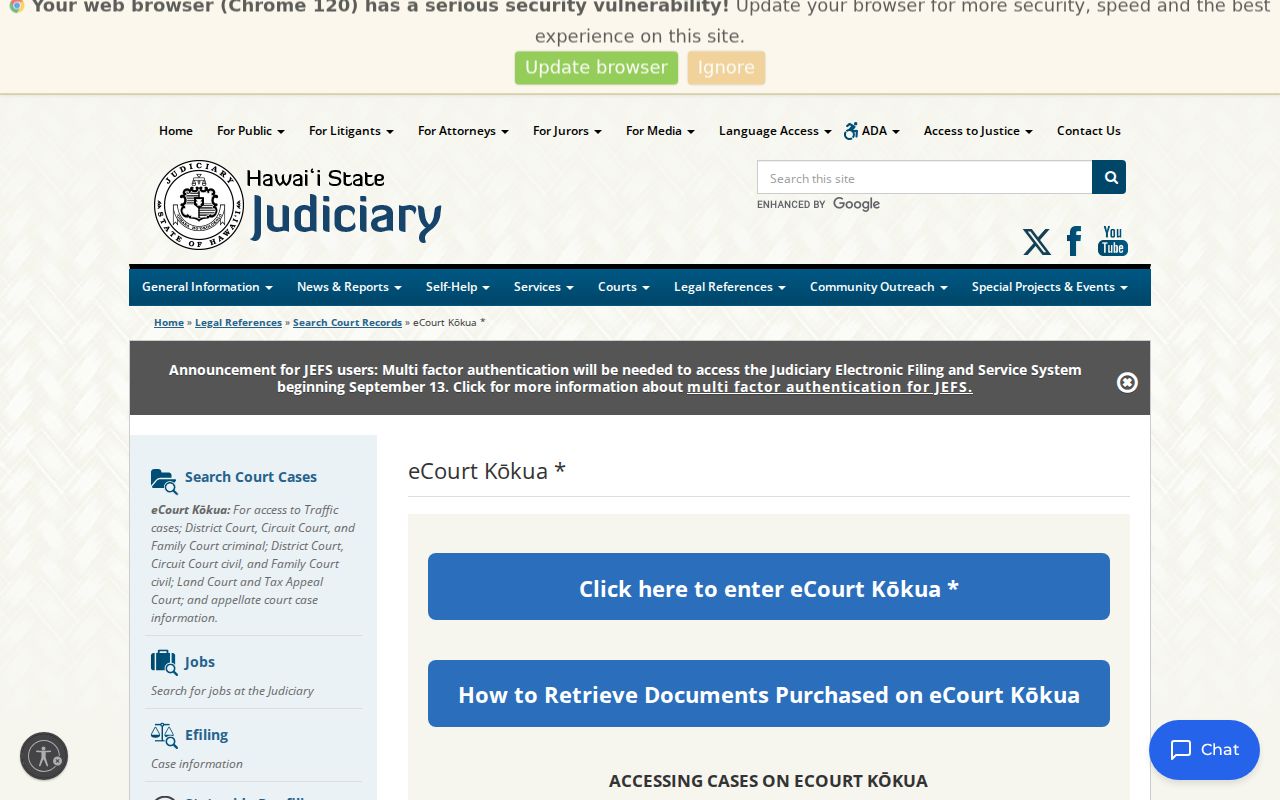
eCourt Kōkua access information explains which Hawaiʻi case types and documents appear online. Party search accepts last, first, and optional middle names. Partial and phonetic controls, filing dates, and case type can narrow a common name. Waianae District Court and Family Court public terminals are at the Kapolei Judiciary Complex, 4675 Kapolei Parkway, and operate first come, first served from 8 a.m. to 4 p.m.
| Public Result | Meaning |
|---|---|
| Case ID, type, status | Identifies the proceeding and current public status |
| Filing date, court, location | Places the case in time and jurisdiction |
| Party name, alias, role | Shows why the name appears |
| Events and disposition | Summarizes public case activity |
| Docket and PDF icon | Lists filings and marks an available public image |
| Hearing details | May show date, time, room, location, and judge |
Case information can exist without an online image. Older civil-document cutoffs vary by case type. Confidential, sealed, and juvenile matters are excluded. A public terminal permits free on-screen review; copies use the court's paid process. The captured Judiciary availability page records the official access route.
Kapolei Voter Lookup Boundaries
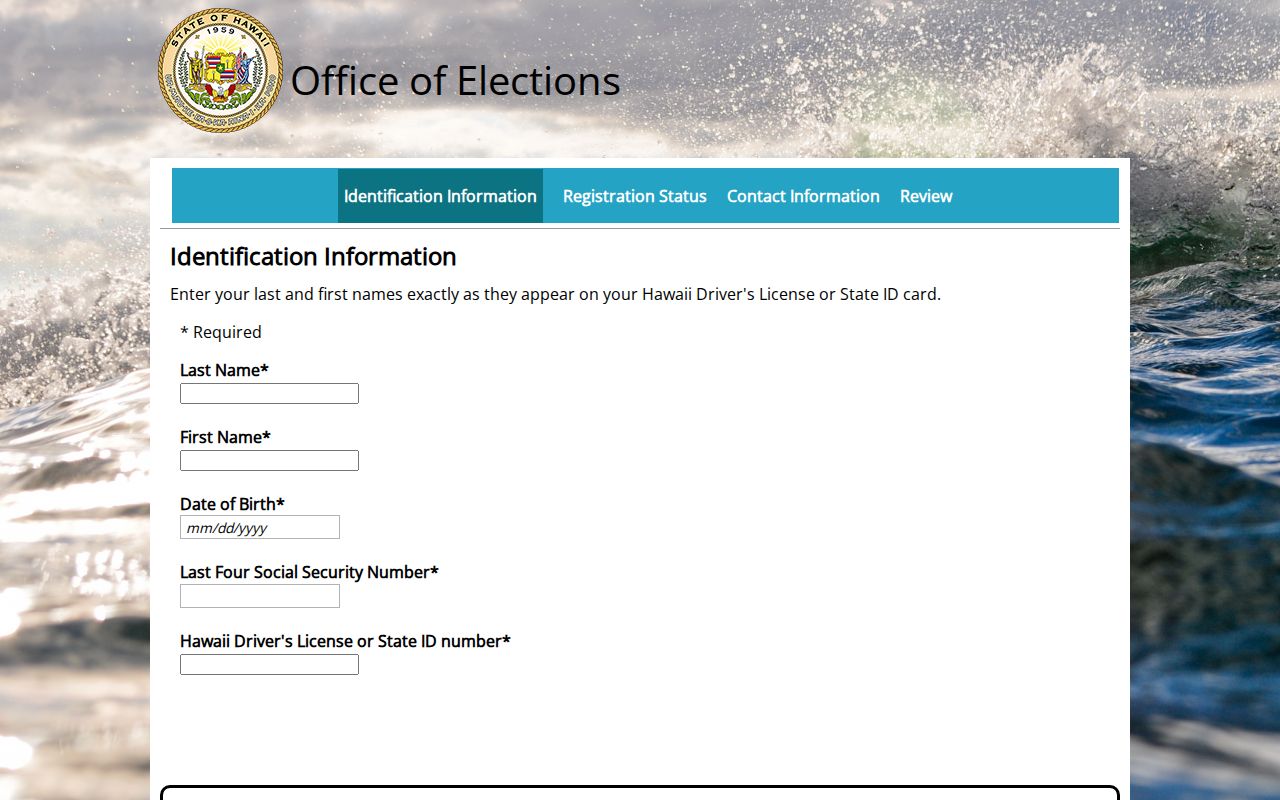
The Online Voter Registration System is a first-party check, not a public people directory. It asks for the registrant's first and last names, date of birth, last four Social Security digits, Hawaiʻi driver license or state ID number, and CAPTCHA. The person can register, update a record, or confirm a registration address.
HRS §11-97 makes a voter's full name, district or precinct designation, and status public while protecting the rest of the affidavit except for authorized election or government purposes. A broader file must go through the Honolulu Elections Division for an election-related purpose. Hawaiʻi does not register voters by party, and ballot choices are not part of a registration lookup.
The official OLVR identity form illustrates that privacy boundary.
Note: Honolulu Elections can provide proof to the registrant, while third-party public-file access remains tied to election use.
Kapolei Vital Record Leads
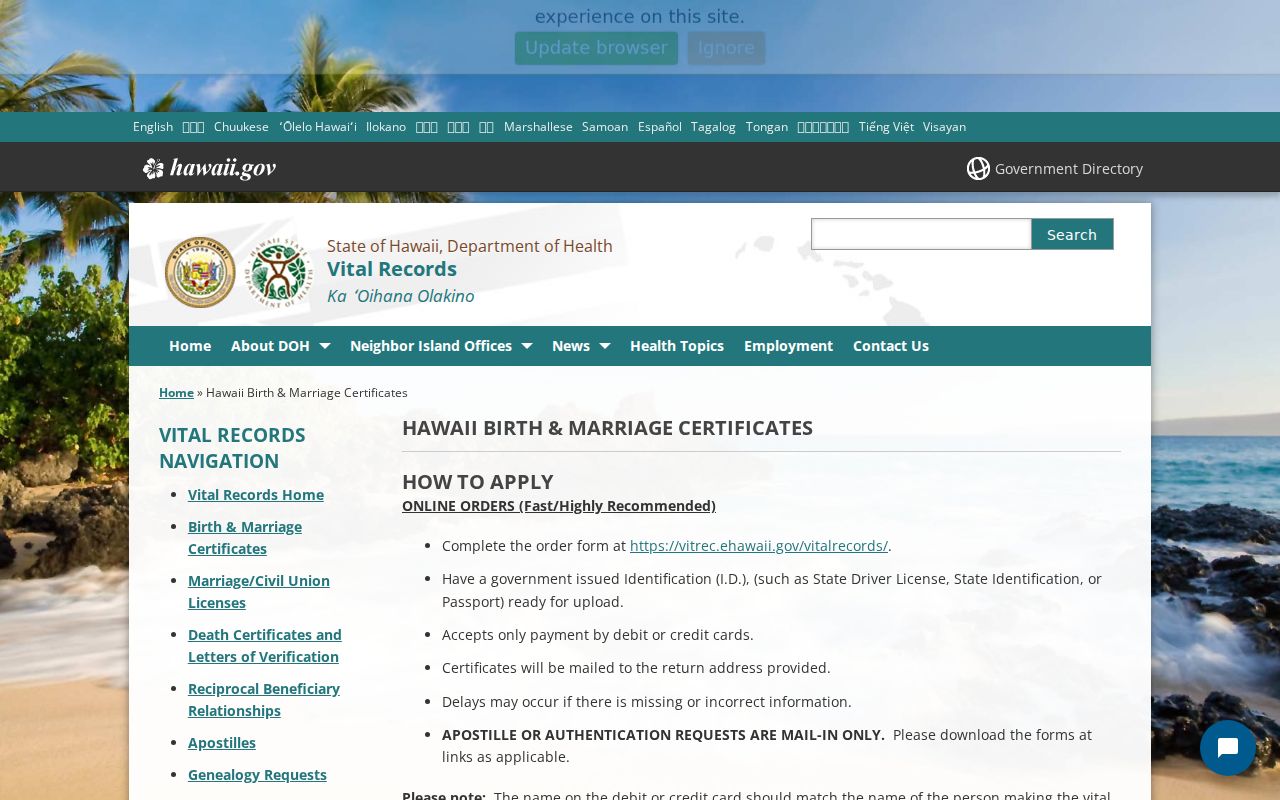
A vital index lead is not an unrestricted certificate. Under HRS §338-18, the Department of Health must find a direct and tangible interest before issuing a certified birth, death, or marriage copy. Requests may be online, by mail, or in person at 1250 Punchbowl Street, Room 103. The order needs event details, requester identity, relationship basis, government ID, delivery address, and payment.
The DOH searches only while processing a paid application. The first copy is $10, each extra copy of the same certificate is $4, and an administration fee applies. Genealogy has a separate route. State law refers to events more than 115 years old, while the DOH genealogy page also gives a “prior to 1921” mail instruction. Confirm the cutoff instead of merging those statements.
The certificate instructions show the access channels and eligibility rules.
Kapolei Divorce Records Moved
As of February 1, 2026, the Department of Health no longer maintains divorce records. Request a decree or file from the court that granted it. For an Oʻahu matter, start with First Circuit and eCourt Kōkua, then use the clerk or courthouse counter when the public docket has no image.
This change matters in a current Kapolei resident lookup. A marriage certificate remains a restricted DOH vital record, while a divorce docket or decree is a Judiciary record with court privacy and document-age rules. The routes cannot substitute for each other. Supply the case ID, party names, document date, requested filing, copy type, and delivery method.
Verify a Kapolei Resident
Build the search from the least sensitive fact available. A known address can lead to a TMK and parcel owner. A known name can be checked in an official professional-license, business, deed, or court index. Dates and roles then show whether results may describe the same person.
- Preserve the exact name and create careful variants for initials, diacritics, ʻokina, and former names.
- Anchor it to a date, TMK, business name, license ID, or known family relationship.
- Search eCourt by party with dates and First Circuit context. Read the party role, not only the name.
- Check a second independent official source. Keep owner, deed party, licensee, and case party roles distinct.
- Ask the custodian for an eligible certified copy when proof is needed. Stop at sealed or protected material.
- Docket
- The dated list of filings and events in a court case.
- Index vs image
- An index describes a record; an image reproduces the filed document and may cost a fee.
- Certified copy
- An official copy bearing the custodian's certification, issued under that office's rules.
A “no result” does not prove absence. Spelling, date range, older offline files, nonpublication, and confidentiality may explain the gap. Use the terminal, written request, library, or archives channel documented for that record.
Kapolei License Identity Checks
The DCCA license search can confirm a regulated license name, ID, status, original and expiration dates, former or trade names, limits, and discipline when present. DCCA says official public data can be downloaded free. Written verification costs $15 and may take up to 20 business days.
License and business addresses are affiliation clues, not automatic home addresses. Hawaiʻi Business Express is the official entity route, but its live fields were blocked during research, so no unverified officer or agent output should be assumed. Recorded instruments may also list an organization as a deed party. Keep each role distinct.
Kapolei Lookup Request Fallbacks
When an index stops short, use the named custodian. The Kapolei Judiciary Complex provides a terminal and records counter. BOC sends pre-1976 land research to its Public Reference Room or written search form. DOH accepts eligible certificate orders online, by mail, and in person. A librarian can identify an exact directory, yearbook, newspaper issue, or archive call number.
A narrow request may proceed under the Hawaiʻi Uniform Information Practices Act, HRS chapter 92F. Identify the agency, record class, date range, subject or TMK, and desired format. The Office of Information Practices manual describes a normal response within 10 business days, or 20 in an extenuating circumstance. Search, review, segregation, copy, and delivery fees may apply.
Note: Ask for a defined record, not “everyone at an address”; separate agency files do not become a public resident list.
Kapolei Resident Lookup Limits
Public access ends at sealed cases, juvenile matters, restricted certificates, protected voter files, and substitute addresses. Hawaiʻi's Address Confidentiality Program gives qualifying survivors a substitute address and mail forwarding under HRS chapter 801G. That address is a safety measure, not an error to reverse through parcels, meetings, or old directories.
Correct a wrong fact at its source. RPAD or city GIS handles parcel fields, BOC handles indexing questions, the court clerk handles case-index issues, Honolulu Elections handles a registrant's update, and DOH handles eligible vital-record corrections. HRS chapter 92F allows access requests but is not a general deletion right.
Lawful use. Use a Kapolei resident lookup only for lawful personal research. Never stalk, harass, intimidate, or reconstruct a protected address.